Now Reading: A Broken SEA Games: How Thailand’s eligibility chaos sabotaged Gilas Pilipinas
-
01
A Broken SEA Games: How Thailand’s eligibility chaos sabotaged Gilas Pilipinas
A Broken SEA Games: How Thailand’s eligibility chaos sabotaged Gilas Pilipinas

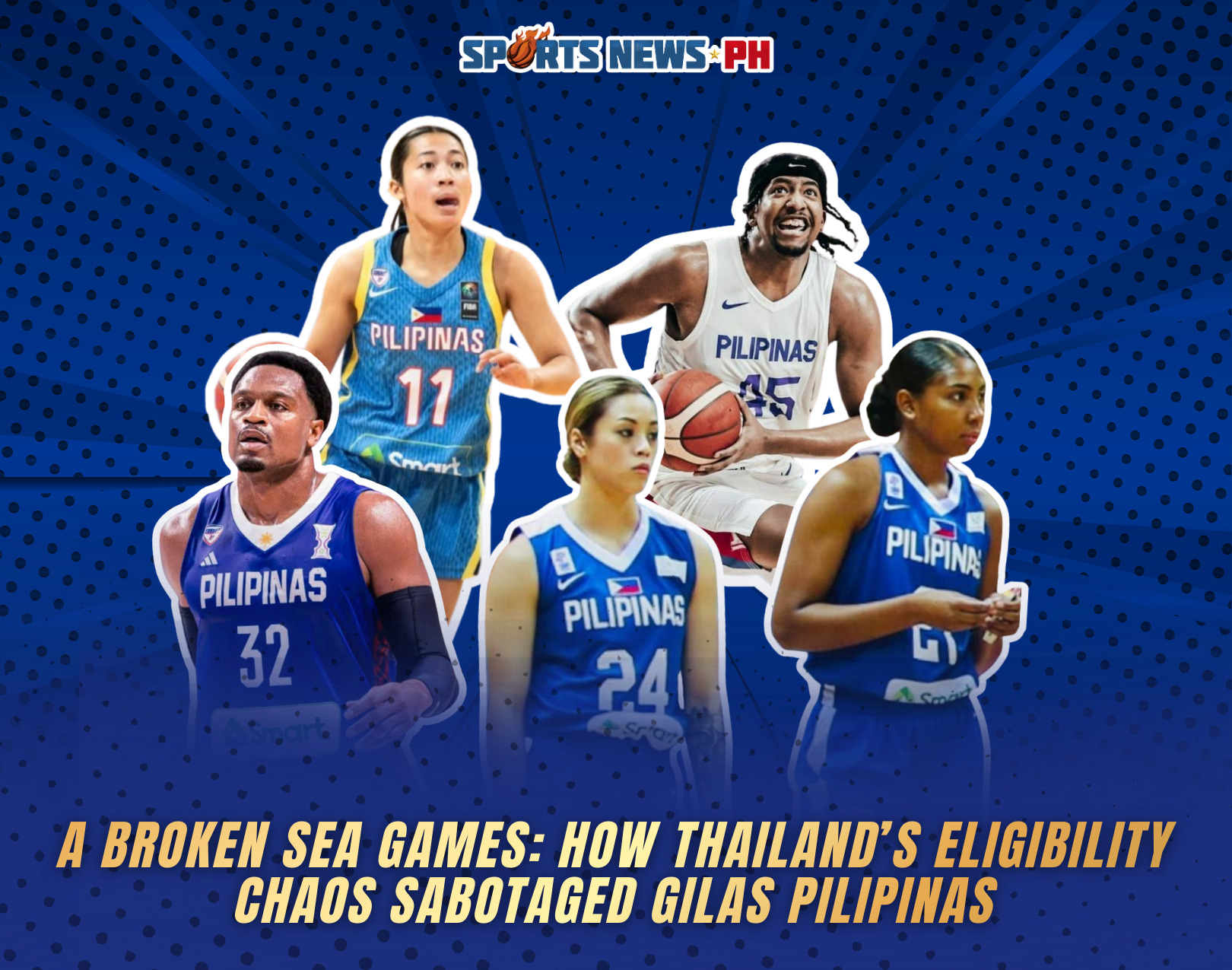
The eligibility fiasco at the 33rd SEA Games isn’t just about stricter rules — it is a complete breakdown of communication so severe that it borders on intentional sabotage. National teams were supposed to spend months preparing, finalizing rosters, building chemistry, and aligning strategies. Instead, the 2025 SEA Games turned into a circus of unclear guidelines, shifting interpretations, and last-minute rulings from Thai organizers that uprooted months of hard work.
The “passport-only” rule — which bans naturalized athletes and Filipino citizens who obtained their passport after age 16 — was never communicated with the clarity and urgency required for an international competition. There were no detailed memos, no early confirmations, no standardized communication pipelines. Instead, teams encountered contradicting answers depending on which official they spoke to. A rule with such high stakes should have been communicated clearly at the start of the year. Instead, it was finalized after rosters were submitted, long after players had trained, committed, and reorganized their professional schedules.
And it is impossible to ignore the fact that the country overwhelmingly affected was the Philippines — the region’s undisputed basketball powerhouse. Whether incompetence or deliberate effort, the outcome paints an unmistakable picture: Gilas Pilipinas was uniquely disadvantaged, while other nations proceeded without disruption.
A Legacy Undermined by Unclear Rules
Basketball is more than a sport to the Filipino people — it is a cultural identity. Historically, the Philippines has been the most successful basketball nation in the Southeast Asian Games, securing 22 total medals: 19 gold and three silver. This level of dominance spans generations, from the era of Caloy Loyzaga to the rise of PBA icons, to the modern Gilas program that continues to represent the country with pride.
Yet this hard-earned legacy now faces unnecessary turbulence, not because of a decline in talent or preparation, but because of unclear, inconsistently applied rules. This year’s SEA Games should have been another opportunity to reinforce regional dominance and test young talent. Instead, it became a case study in how poor governance can cripple even the strongest programs.
Athletes and coaches were left scrambling to rebuild plans on the fly. Systems that typically take months to refine were forced into rushed revisions. The damage extends beyond this tournament — it threatens long-term development and undermines the credibility of SEA Games basketball itself.
A Crisis Born From Miscommunication
The eligibility fiasco at the 33rd SEA Games isn’t just about stricter rules — it is a complete breakdown of communication so severe that it borders on intentional sabotage. National teams were supposed to spend months preparing, finalizing rosters, building chemistry, and aligning strategies. Instead, the 2025 SEA Games turned into a circus of unclear guidelines, shifting interpretations, and last-minute rulings from Thai organizers that uprooted months of hard work.
The “passport-only” rule — which bans naturalized athletes and Filipino citizens who obtained their passport after age 16 — was never communicated with the clarity and urgency required for an international competition. There were no detailed memos, no early confirmations, no standardized communication pipelines.
Instead, teams encountered contradicting answers depending on which official they spoke to. A rule with such high stakes should have been communicated clearly at the start of the year. Instead, it was finalized after rosters were submitted, long after players had trained, committed, and reorganized their professional schedules.
And it is impossible to ignore the fact that the country overwhelmingly affected was the Philippines — the region’s undisputed basketball powerhouse. Whether incompetence or deliberate effort, the outcome paints an unmistakable picture: Gilas Pilipinas was uniquely disadvantaged, while other nations proceeded without disruption.
Thailand, meanwhile, enters the SEA Games men’s basketball tournament with a surprisingly reinforced lineup, fielding several mixed-heritage players who are eligible as locals under FIBA rules. Frederick Lish, Moses Morgan, Tyler Lamb, Maximus Williams, Junior Ejesu, and newcomer Thatcharin Narbonne all strengthen the squad, providing a depth and versatility that most ASEAN rivals lack. Ibrahim Diaby could further bolster the team if FIBA approves his nationality, adding to Thailand’s competitive advantage.
Even with the absence of key big man Martin Breunig, the hosts are banking on Ejesu and Chanathip Jakkawan to lead the charge, making the field even more challenging for Gilas Pilipinas — especially as Justin Brownlee, one of the Philippines’ most experienced and effective players, is barred from competing under the same eligibility rules.
OKBET is Asia’s most trusted and popular online sports gaming platform. Visit us on OKBET to stay up to date with all sports news from around the world.
Thailand clearly had the Ph in mind in shadily implementing eligibility rules in the 11th hour. As things stand, no Brownlee, Kouame, Mike Phillips, Brandon Rosser, Remy Martin.
It’s the Sea Games though and a team of PBA players should still win the gold if they don’t mess up.
— PBA insider
(@PBAinsider) November 29, 2025
JUST IN:
Poy Erram is “being pushed” to be included in the Gilas roster for the SEA Games, multiple sources told me.
The 12-year PBA veteran has the blessing of TNT to play in the biennial event.
But here’s the problem: The Thai Organizing Committee is very arbitrary on its…
— Homer Sayson (@HomerSayson) December 3, 2025
Men’s Team: Struck Down by Shifting Standards
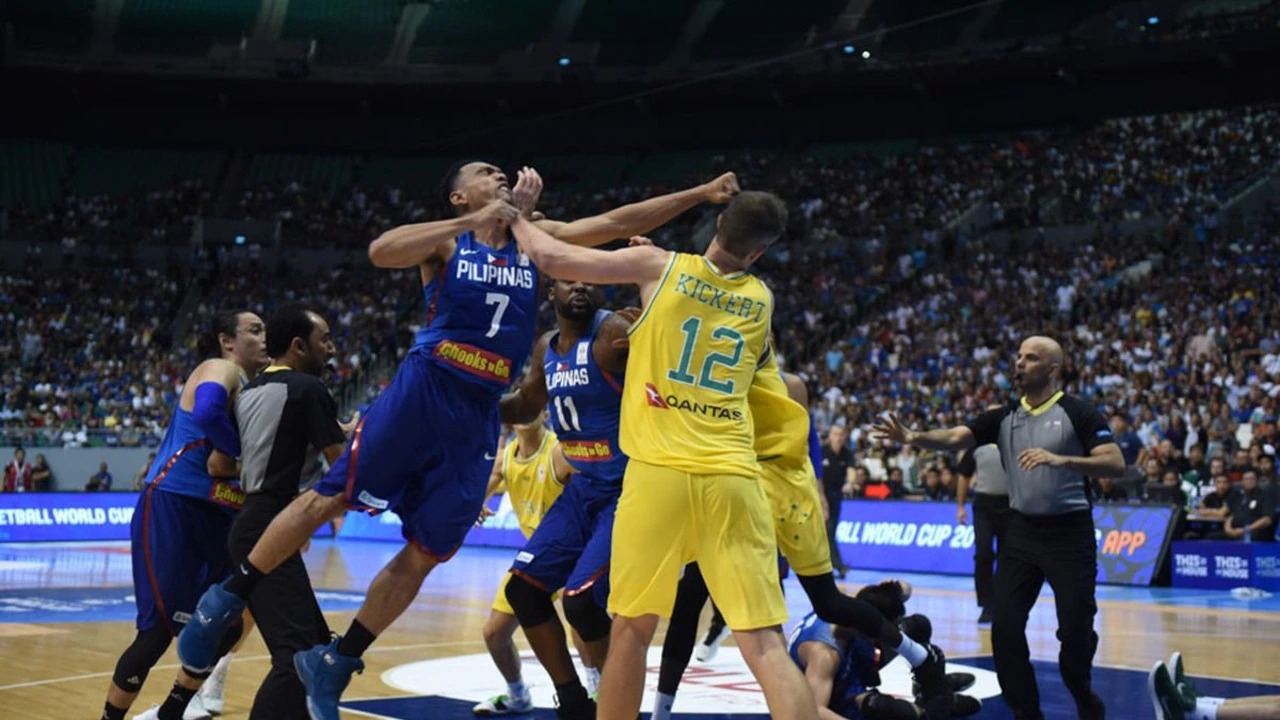
The men’s program suffered the most dramatic impact, with multiple core players suddenly declared ineligible despite having represented the Philippines legally and without issue in previous SEA Games. Justin Brownlee — a naturalized Filipino who has given everything to the national team — was one of the first casualties. Ange Kouame, a cornerstone of Philippine basketball since his Ateneo tenure, was also banned under the new interpretation. Remy Martin, Michael Phillips, and Brandon Ganuelas-Rosser were similarly ruled out, leaving enormous gaps in both skill and experience.
The SBP had no choice but to reconstruct the roster in emergency fashion. Jamie Malonzo, Matthew Wright, Thirdy Ravena, and Ray Parks Jr. were quickly assembled, even if some had minimal time to prepare. Promising collegiate players like Allen Liwag and Cedrick Manzano were thrust into roles meant for seasoned veterans. Team chemistry, playbook familiarity, and defensive schemes had to be reset practically overnight.
This wasn’t just an inconvenience. It was deeply disrespectful — to the athletes who prepared, to the coaching staff who planned, and to the Philippine basketball community that deserves fairness and transparency.
Women’s Team: Victimized by the Same Failures
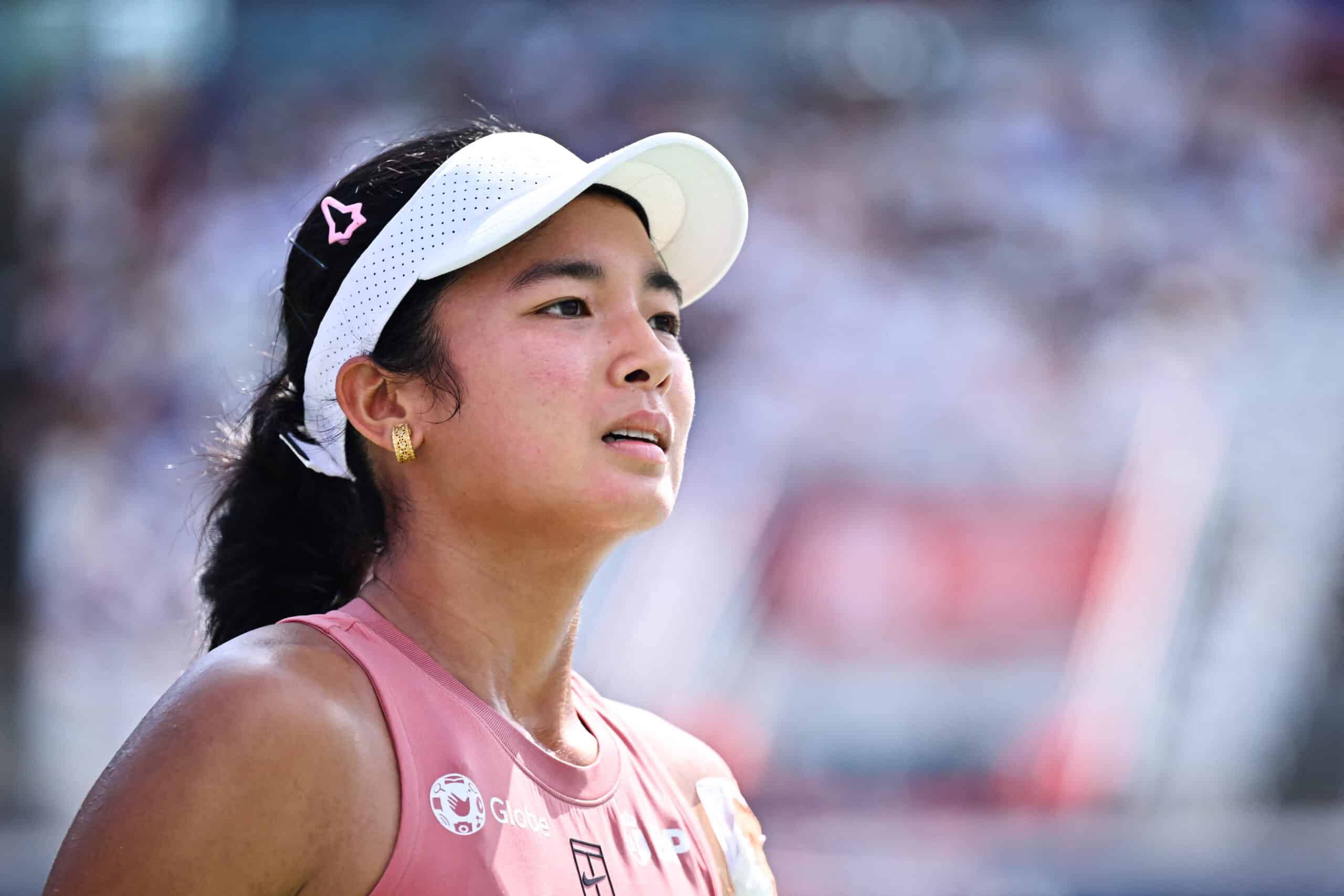
The women’s program, which has worked tirelessly to rise from obscurity into regional contention, was thrown into similar chaos. Gabi Bade and Stefanie Berberabe — two players who embody the modern rise of women’s basketball — were suddenly rendered ineligible under rules they had previously qualified under. With Jack Animam unavailable due to her commitments in Europe and other core players missing, the coaching staff led by Pat Aquino had to rebuild the lineup with little to no time for proper preparation.
This setback is especially devastating because the women’s program has grown steadily in recent years. While they do not yet possess the medal haul of the men’s program, their progress has been undeniable: improved international standing, stronger development pathways, and growing fan support. All of that momentum was undermined by the same poorly handled eligibility enforcement that blindsided the men’s side.
This Is Not Just About Rules — It’s About Respect
Beyond logistical failure lies a deeper issue: respect. The Philippines deserved clear, timely, and official communication — not mixed signals and late rulings. Several troubling questions linger:
- Why were the strictest interpretations applied only after rosters were submitted?
- Why were there different answers depending on who was asked?
- Why was the Philippines the only country whose roster was dramatically gutted, while Thailand continues with six mixed-descent players and a naturalized player?
The SEA Games are supposed to be built on camaraderie, sportsmanship, and equality across nations. But the current situation suggests a competition where rules can be bent, twisted, or selectively enforced depending on which country stands to lose the most.
The Human Cost: Players Deserve Better
Behind the bureaucracy are real athletes whose lives and careers were directly harmed. Many turned down club opportunities, rearranged their offseason, and dedicated themselves to representing the flag. They spent months training in anticipation of a tournament they suddenly could no longer play in. The emotional toll of being told — weeks before competition — that they were disqualified through no fault of their own is immense.
These players weren’t disallowed because they lacked commitment or talent. They were sidelined because of administrative negligence. The heartbreak, frustration, and confusion they now face should never have happened in a tournament that prides itself on unity and sportsmanship.
The Damage: Competitive and Beyond
The consequences extend well beyond the court. The sudden roster upheavals damaged long-term program planning, undermined athlete development, and disrupted the continuity essential to a modern basketball program. Younger players were pushed into roles too soon, not for growth, but out of necessity. Coaches had to abandon months of planning and rebuild strategies under impossible time constraints.
This fiasco has also eroded fan confidence. Filipino supporters — known worldwide for their passion and dedication — now feel that their teams were unfairly targeted. Worse, this incident tarnishes the integrity and reputation of the SEA Games as a legitimate competition.
Where Do We Go From Here?
If events like this continue, the SEA Games risk devolving into a tournament dictated not by skill or preparation, but by loopholes, politics, and host-nation power. To prevent this, the following steps must be implemented:
Eligibility rules must be published and finalized months before the games. Sudden reinterpretations should be banned. Clear, transparent communication must be mandatory. Oversight from neutral parties should prevent host nations from manipulating rules. SBP must push back — strongly — and demand accountability.
This is bigger than basketball. It’s about fairness, professionalism, and the future integrity of the SEA Games.
Gilas Will Play — But the Damage Is Done
As always, Gilas Pilipinas — men and women — will compete. They will fight with pride, heart, and the character that has made the Philippines the most feared basketball nation in Southeast Asia. But they do so knowing the battlefield is already tilted against them. That is the true tragedy of this year’s Games.
When rules shift only when the Philippines is affected, when communication becomes a tool for disruption, and when athletes lose opportunities because of unclear governance, the spirit of fair competition is already broken. Even victory will feel bittersweet — because it will never erase the fact that the fight was never fair to begin with.
Don’t miss out on the latest sports news, updates, and fan discussions!
 Follow our Facebook page Sports News PH today and be part of a growing community of passionate basketball fans!










Related Posts
Stay Informed With the Latest & Most Important News
Previous Post
Next Post