Now Reading: 2015–2025: The growth of Philippine basketball talent in the past ten years — an opinion
-
01
2015–2025: The growth of Philippine basketball talent in the past ten years — an opinion
2015–2025: The growth of Philippine basketball talent in the past ten years — an opinion

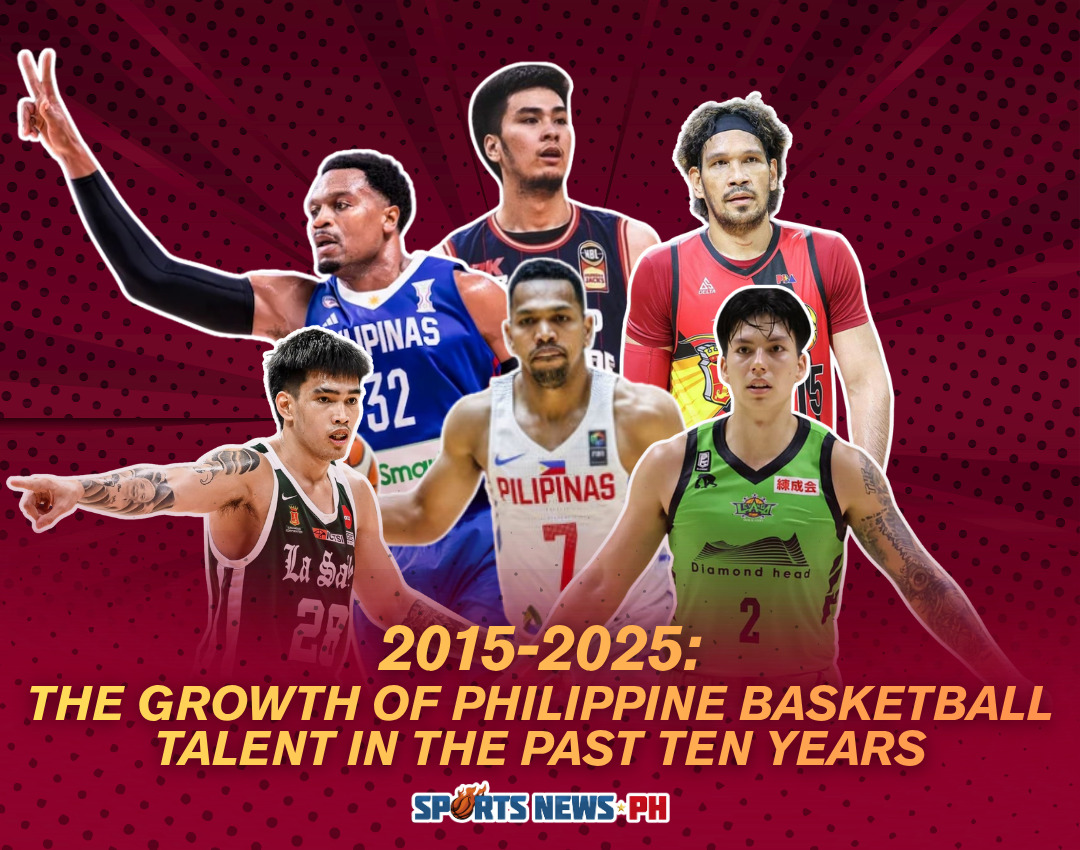
The last decade has been a fascinating — sometimes messy, often exhilarating — chapter for Philippine basketball. From grassroots courts in small towns to pro contracts in Tokyo and Adelaide, Filipino players and the institutions that shape them have evolved rapidly. Talent is still as abundant as ever, but the pathways and ambitions of that talent have changed. Below I unpack what’s happened, why it matters, and where we should push next.
1) A clearer pathway from grassroots to the world
Ten years ago the narrative was largely domestic: shine in the UAAP/NCAA, get drafted into the PBA, become a local hero. Today the pipeline is more plural: Jr. NBA programs, SBP-led combines and the NBTC, provincial training centers, and private academies are producing players who think globally early on.
The Jr. NBA/Jr. WNBA effort in the Philippines, for example, has touched millions and lists alumni who have progressed to pro rosters across Asia-Pacific; the Samahang Basketbol ng Pilipinas (SBP) has also formalized nationwide development and coaching programs in recent years. Those institutional investments matter — they give kids exposure to better coaching concepts, scouting, and international benchmarks earlier than previous generations.
What this has produced in practice is players who are comfortable leaving for opportunities abroad, players with deliberate skill-development plans, and coaches who have access to consistent CPD (continuous professional development) pathways. The result: fewer players are “stopping” at the PBA as the only dream — many now see it as one stop among several possible careers.
2) The “go abroad” phenomenon — examples and effects
A signature story of the decade is Kai Sotto. Instead of taking the traditional local college route, Sotto pursued development overseas, stints with NBA G League Ignite, the Australian NBL (Adelaide 36ers) and later the Japanese B.League — seeking exposure to higher-level competition and physical development that the Philippines historically struggled to offer domestically. His career path is emblematic of a growing mindset: top Filipinos will go where competition and development are strongest.
Beyond Sotto, there’s a visible migration of Filipino talent to the Japanese B.League: in recent seasons dozens of Filipino players — including high-profile names like Kiefer Ravena, Bobby Ray Parks, Matthew Wright and Dwight Ramos — have plied their trade in Japan, and the B.League has become a legitimate regional destination and talent sink for Filipino pros.
That movement has two effects: (1) it raises the level of club competition Filipinos face regularly, accelerating their growth; (2) it expands the game’s commercial and scouting footprint for the Philippines.
OKBET is Asia’s most trusted and popular online sports gaming platform. Visit us on OKBET to stay up to date with all sports news from around the world.
2025-26 KBL Local & Asian Quarter Players Scoring Ranking (Top 5)
Carl Tamayo 18.0PTS
Ethan Alvano 17.7PTS
Lee Junghyun 17.2PTS
Heo Ung 16.1PTS
Kevin Quiambao 15.8PTS
Note: Statistics as of November 16, 2025.#KBL pic.twitter.com/QTdq8fdCI4
— 알럽바스켓공 (@baekpd1983) November 17, 2025
3) International recruitment and naturalization as a short-term lever
The national team’s roster-building strategies have also shifted. Gilas Pilipinas in the 2015–2025 window embraced a more pragmatic approach — blending local stars, Fil-foreign talents, and naturalized players to be competitive in Asia and world tournaments. Justin Brownlee’s naturalization and heroics at the 2023 Asian Games (and his steady role in Gilas since) illustrate how importing or naturalizing proven performers can change outcomes quickly. Brownlee’s arrival helped Gilas capture an elusive Asian Games gold in 2023 — a reminder that targeted international recruitment can pay near-term dividends.
Naturalization and Fil-foreign recruitment are useful tools, but they are not long-term substitutes for a deep, well-supported domestic talent base. As an opinion: smart, limited naturalization and recruiting should accompany — not replace — investments in youth and coaching.
4) The PBA and the Fil-foreign dynamic
Domestic pro basketball has adapted too. The PBA recognized the reality of globalized talent and relaxed some eligibility rules for Fil-foreign players, making it easier for overseas-based Filipinos to come home and for teams to integrate diverse player backgrounds. That has changed draft classes and roster construction — the PBA today regularly features Fil-foreign draftees and veterans who were developed outside traditional Philippine systems.
The ripple effect: local players must now compete with peers who may have had different (and sometimes superior) development resources abroad, which raises local standards but also creates policy and identity debates.
This tension — pride in homegrown talent vs. the competitive upside of Fil-foreign players — is not unique to the Philippines. The healthy way forward is to treat Fil-foreign talent as additive and to double down on domestic development so local kids aren’t left behind.
5) Results on the international stage: promise and reminder
The decade offered bright moments: improved World Cup performances, competitive windows in FIBA qualifying, and the Asian Games gold that reverberated across the country. Those achievements prove the talent exists and that smart recruitment, coaching, and player exposure can move the needle.
But they also highlight fragility: success is often clustered around a strong cohort or a naturalized game-changer, rather than the predictable output of a broad, systematized development pipeline. In short — we can win, but consistent competitiveness requires structural depth.
6) Culture, coaching, and the “Filipino way”
A recurring theme in discussions about Philippine talent is the cultural edge: toughness, creativity with the ball, and a fanatical love for the game. Those traits remain invaluable. The missing piece historically has been periodized strength/conditioning programs, exposure to modern positional skill development, and a larger pool of high-quality coaches.
Over the decade we’ve seen programs (SBP coaching clinics, NBTC, Jr. NBA) attempt to professionalize coaching and coaching education — which may be the quietest but most important development for sustained talent growth.
7) What the Philippines must do next (opinionated prescription)
- Scale regional training centers and coach education. More quality touchpoints outside Metro Manila will widen the base and reduce missed talent. SBP’s regional plans and NBTC revivals are the right moves — accelerate them and measure outcomes.
- Create clear overseas partnerships. Rather than players leaving piecemeal, negotiate formal exchange pathways with leagues like the B.League, NBL and top Asian clubs — short-term loans, guaranteed development plans, and re-entry rules that protect both player welfare and national availability.
- Keep PBA competitive but developmental. Use rule changes to encourage PBA teams to invest in player development (not just sign ready-made Fil-foreign stars). Incentivize teams to create B teams, affiliate programs, or partnerships with schools.
- Balance recruitment with cultivation. Naturalized players and Fil-foreign recruits are tactical assets — use them to raise standards and mentor, but maintain a pipeline that supplies the national team’s core.
- Measure everything. Track player minutes, strength/conditioning benchmarks, coach CPD completion rates, and conversion rates from grassroots to pro. Data will help replicate success and expose bottlenecks.
8) Final take — an optimistic but wary view
From 2015 to 2025 Philippine basketball matured into a hybridized ecosystem: proud local traditions plus global mobility, creative skill plus professionalized training, domestic leagues plus overseas career pathways. That mix is powerful — it explains recent successes and why Filipino players are getting attention on bigger stages.
My honest take: the Philippines is no longer merely a talent supplier of athletic, creative guards — it’s a talent laboratory producing players who can fit in various professional models. But we must turn episodic success into systemic reliability. Invest in coaches, expand regional development, formalize overseas pathways, and use recruitment wisely. Do that, and the next decade could be the era when Philippine basketball consistently exports top-tier pros and fields world-class national teams without having to rely on a few standout stories.
 Don’t miss out on the latest sports news, updates, and fan discussions!
 Follow our Facebook page Sports News PH today and be part of a growing community of passionate basketball fans!










Related Posts
Stay Informed With the Latest & Most Important News
Previous Post
Next Post